

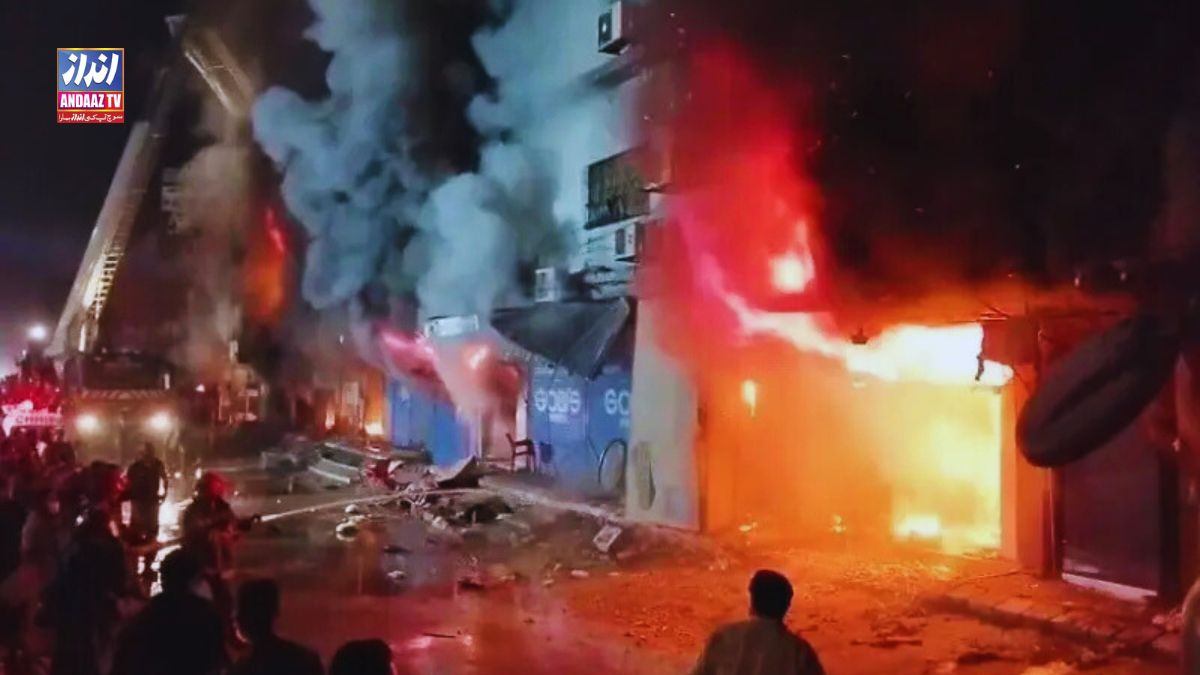
Karachi’s Gul Plaza shopping mall fire, which has already claimed 14 lives and injured scores, is once again making headlines—not because it has been fully controlled, but because it keeps reigniting despite a massive firefighting effort.
Television cameras capture the valiant efforts of firefighters, rescue teams, and even the armed forces called in to assist—but one critical question remains unasked: why is the fire still not under control, and why is there no mention of foam-based suppression technology, a standard in modern fire science?
Reports from the scene describe firefighters struggling to enter the building as flames spread floor by floor. Water bowsers and high-reach snorkels dominate the coverage. Officials repeatedly highlight hydrants and water tankers, and politicians line up to express grief and condolences. Yet, for all the visible effort, the blaze continues, and reports of trapped people persist.
What is clear is that Karachi’s firefighting system
is heavily reliant on water-based methods alone, even when the fire has escalated beyond the point where water can effectively suppress it.
Most of the criticism covered by the media focuses on issues such as the insufficient number of firefighters, delays in their arrival, the misuse of building space for an excessive number of shops, and the carelessness of government officials. Yet no media outlet or firefighting expert has discussed foam-based suppression technology, most probably due to a lack of awareness about the subject.
Water, while essential, is only effective in the early stages of a fire. Once a blaze has reached a deep-seated, fully developed phase, as is the case at Gul Plaza, water applied externally or intermittently serves largely as a cooling measure. It cannot penetrate enclosed shops and warehouses filled with combustible goods, nor can it prevent re-ignition from smouldering material hidden inside walls and storage piles. This is precisely why the fire has been flaring up repeatedly: the fundamental issue is not a lack of effort, but a mismatch between fire behaviour and firefighting methods.